
What is the difference between horizontal pickets and cable railing?
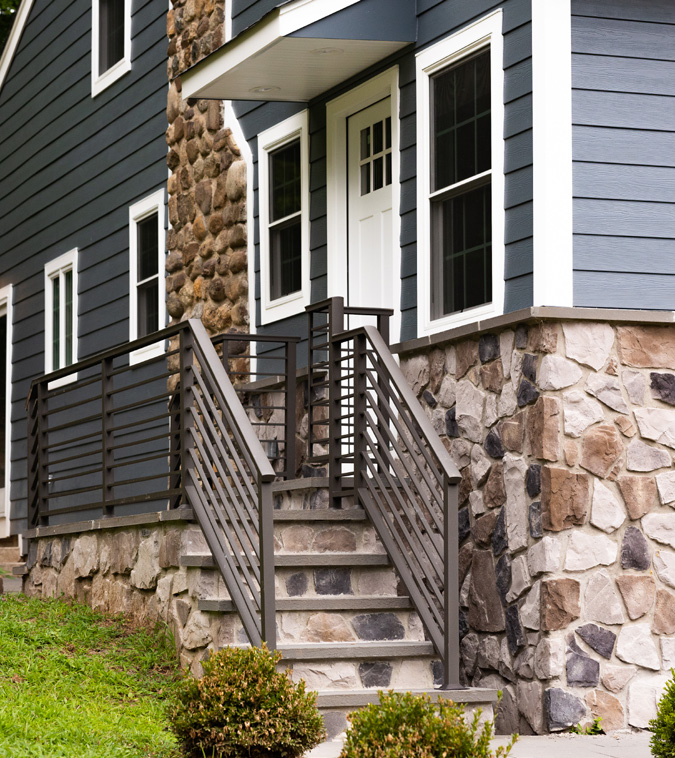
Horizontal picket railing uses rigid aluminum pickets that run between posts. The evenly spaced pickets create a consistent horizontal pattern that can be subtle or more noticeable depending on the selected detail, finish, and the way the railing meets stairs and landings.
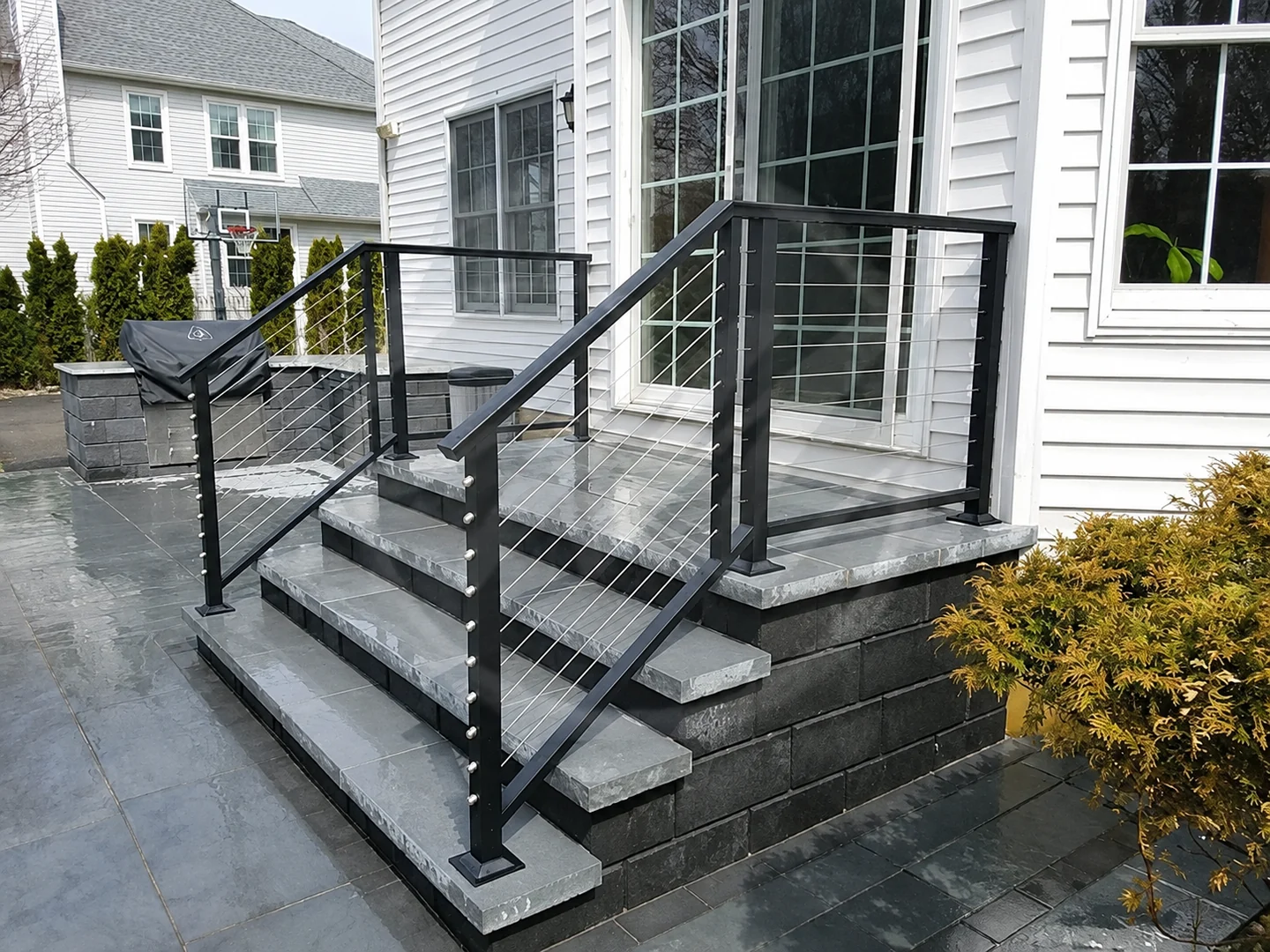
Cable railing uses stainless-steel cable infill inside an aluminum frame. The cable lines are tensioned as part of the system. From farther away, they can recede more than wider pickets, which is why many homeowners consider cable when a backyard, garden, water, or other view is important.
Consider the view from where you will sit.
Think about the view from the places you use most, not only from the edge of the deck. Sit in a chair, stand at the kitchen window, or look from the bottom of the stairs. A railing can feel very different from those positions than it does in a product photograph.
Cable can make sense when you want to keep attention on what is beyond the railing. Horizontal pickets may be the better fit when you want the railing itself to create a deliberate line that connects with porch details, window trim, deck boards, or the architecture of the home.
Compare the whole railing system, not only the infill.
The pickets or cables are only part of what you will see every day. Post spacing, top rail details, the path of a stair rail, corners, transitions, and finish color all affect how open or substantial the finished railing feels. A dark finish may connect with black windows or blend into a shaded landscape. The right finish is the one that works with the specific materials around your home.
This is where seeing samples helps. Bring photos of the space and compare the options against what is already there. You do not need a finished plan before you start the conversation.
What you see through the railing
Cable's thin stainless-steel lines can keep a deck, porch, or stair view feeling more open. Horizontal pickets create a clearer pattern and make the railing a stronger design feature.
How it works with your home
Horizontal pickets can reinforce long rooflines, wide steps, and clean architectural lines. Cable can create a lighter boundary when you want the surrounding view to take more attention.
Your actual layout
Posts, corners, stairs, turns, openings, and the surface receiving the railing all matter. Look at the system as a whole, not just one sample photo.
Care over time
Ask about routine care for the specific system being considered. Cable systems need cleaning and periodic attention according to the manufacturer's instructions, while aluminum picket details and finishes should be discussed for your environment and project.
Include your day-to-day needs early.
If children or pets are part of daily life around the project area, raise that early in the conversation. It is also useful to point out where people enter and exit, how the stairs are used, and any conditions around the deck, porch, or landing. Your actual project conditions and applicable local requirements should be reviewed for the system being considered.
Do not assume a railing shown online will be the same solution for every home. A project-specific review is the right time to discuss the layout, available options, and details that matter to your household.
A quick way to narrow it down.
Horizontal picket railing may suit you if you:
- Want the railing to be a visible part of the design.
- Prefer rigid aluminum pickets and a defined horizontal pattern.
- Want the railing lines to connect with the architecture of your home.
- Want to compare finish and detail options for a custom-sized project.
Cable railing may suit you if you:
- Want the view beyond the railing to take more attention.
- Prefer thin cable lines and a lighter overall appearance.
- Like the look of stainless-steel cable in an aluminum frame.
- Are prepared to discuss care for the specific system and environment.